
Blog Post
Leading With Expectation vs. Expectancy

I’ve sat across the table from enough pastors to recognize the weight that quietly builds up over years of ministry. It rarely announces itself. It shows up in the tightness of your jaw during a leadership meeting, in the restlessness that follows a Sunday where things didn’t go as planned, in the slow erosion of joy when reality refuses to cooperate with vision.
One pastor I know gave nearly five years to rebuild a struggling church. The people loved him. The community was slowly changing. And yet he could not shake the feeling that he was failing — because the growth he had envisioned had not arrived on his timeline. Without fully realizing it, he was carrying the crushing weight of unmet expectation. Not hope. Not faith. Expectation — the quiet demand we place on circumstances, on people, and on God Himself that things must unfold the way we have planned.
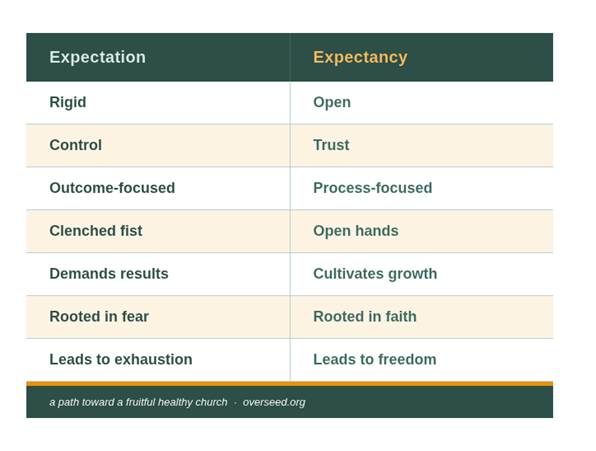
Understanding the difference between expectation and expectancy is not a matter of semantics but of spiritual posture. Expectation is rigid. It has already decided the outcome, the timeline, and the method. Expectancy, by contrast, is a posture of open and hopeful trust. It believes deeply that God is at work, even when the evidence is slow in coming. Think of it this way: expectation grips the steering wheel and refuses to let go, while expectancy keeps its hands open, ready to follow wherever the road actually leads. We are not called to control every outcome. We are called to faithfully walk through what God places before us, trusting that He is doing something despite what we see in the moment.
At the heart of this struggle is often the deeper issue of identity. If our sense of worth is rooted in what we produce, then every unmet expectation feels like personal failure. However, if our identity is rooted in Christ, something changes. We are freed from the need to control every outcome. We can lead as a child of God, from a place of already being loved, already being known, already accepted.
There is a quiet power in falling in love with people and the process rather than becoming consumed by the outcome. When we become overly focused on a specific result, we add pressure to people’s lives. We run the risk of missing the very places where God is forming character and deepening faith. Ministry is not built on predictability. It’s built on love and love is patient. Love makes room for growth, failure and transformation over time. When we lead from expectancy rather than expectation, we notice the redemptive opportunities in the in-between moments. We can help others process conversations that don’t go as planned, to accept God’s timing when His pace seems slow, to come along side people in the quiet work that shapes individuals and a congregation for decades.
So here’s an invitation: take one area of your ministry where frustration has quietly settled in — a relationship, an initiative, a team that has not grown the way you hoped — and ask yourself honestly whether you have been leading from expectation or expectancy. Be clear about the desired outcomes and then release them. Not with resignation, but with the settled confidence that God is at work, and that your role is to be a faithful presence and to invest in those you lead. The weight you have been carrying will begin to lift — not because the work becomes easier, but because you are no longer carrying what was never yours to carry. You will find yourself free to lead with greater clarity, greater peace, and deeper trust in the One who is faithfully building His Church.
SIGN UP NOW FOR OVERSEED MINISTRY UPDATES
Get updates on resources, ministry needs, opportunities, and news about what God is doing in New England
We are careful with your information. We never sell or misuse your data. You can opt out at any time.